
How to Build Strong Team Culture in Hospitality
May 04, 2026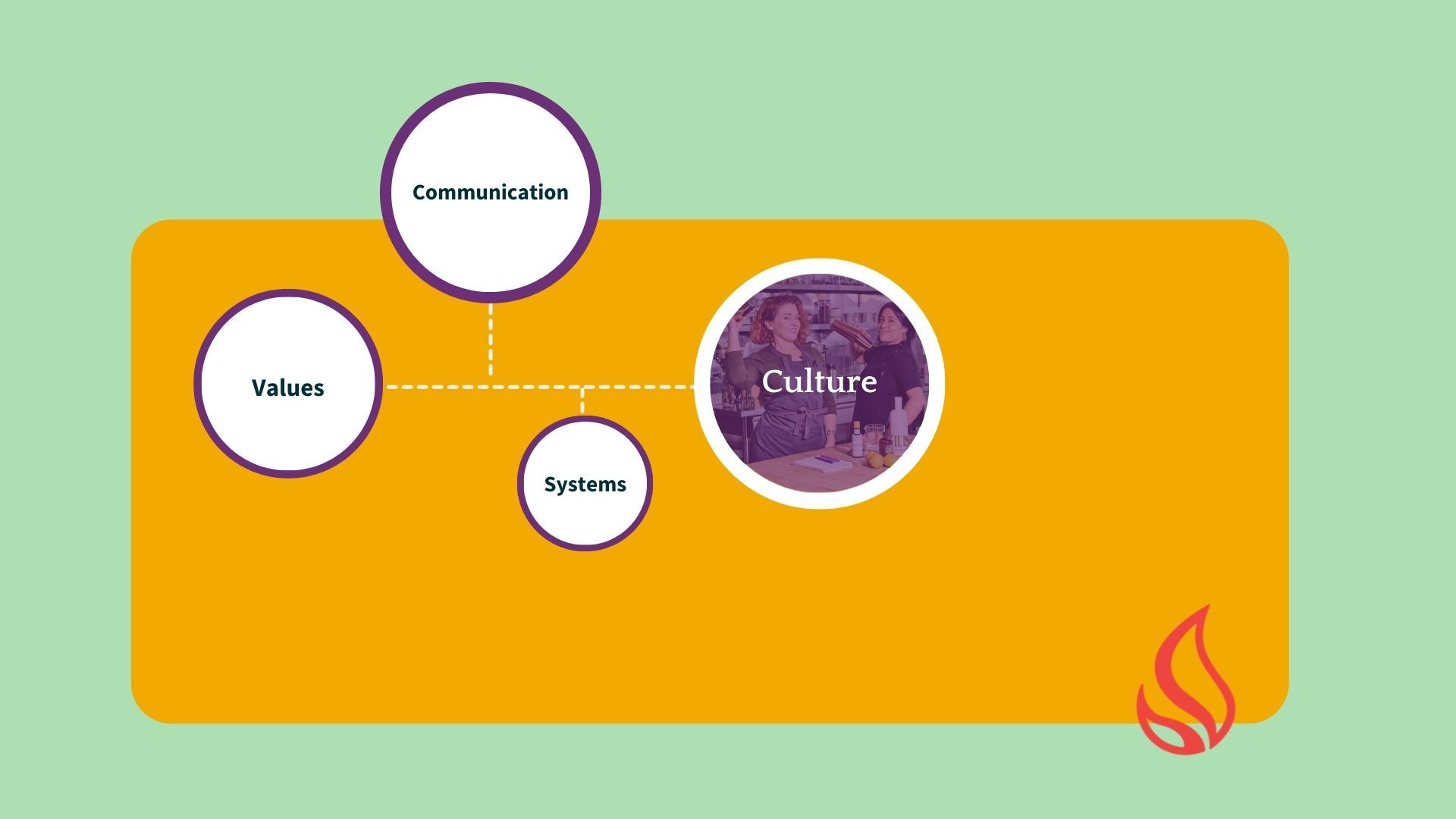
We are thrilled to welcome Courtney Blake of Pilot Light Consulting, as a Guest Coach in The Walk-In: a 6 month group coaching program to become the leader you’ve always needed in this industry.
Since 2016, Courtney and the team at Pilot Light Consulting have been working with owners, independent hospitality ventures, social enterprises, and CPG companies using human-centered systems design to build organizations where people can be proud to work. These folks are culture and hospitality experts.
Members of The Walk-In benefit from coaching support from experts like Courtney during the program, giving you a place to ask your burning questions about topics like HR, management training, marketing, and how to build a team culture.
In this blog, Courtney answers the question you’ve been quietly asking yourself but don’t want to say out loud: WTF is culture, and how do I actually create a healthy, high-performing one? She’s giving you the definition of culture you’ve been missing and tactical, practical tips for how to build a team culture.
We hope you learn as much from this article as we did.
Alison & Kimberly
How to Build Strong Team Culture in Hospitality
By Courtney Blake, Pilot Light Consulting
I started working in hospitality as a dishwasher at 15 and told myself I would never work in another restaurant. Twenty-four years later, here I’m still here, still in it, and still deeply convinced that the people who work in this industry deserve better than what we've historically given them.
At Pilot Light Consulting, my team and I have spent years watching operators with genuinely good intentions burn through staff, not because they were bad people, but because they were:
- Leading unintentional cultures
- Suffering from the scarcity of trust, time, and stability that results from those cultures
I think they were hoping to get lucky: landing a team that clicked organically, that laughed together, that stayed.
But lucky isn't a strategy. Eventually, lucky can turn toxic.
The antidote is intentional hospitality culture. And at its core, intentional hospitality culture is built on three things that sound simple but require real practice:
- Leading from your values
- Communicating with structure and intention, and
- Building systems rooted in compassion.
If all that sounds good, but you don’t know what it actually looks like to do those three things in your business, keep reading. How to build a team culture doesn’t need to be a mystery, and you’ve probably already learned you can’t count on luck.
Our Definition of Culture
Culture is the set of values, beliefs, and systems that influence individual and team behaviors. Notice that last word: systems. Culture isn't a vibe. It's not the playlist you put on before service or the way your team high-fives after a great night. Those things are expressions of culture, but they aren't the engine.
The engine is what you build deliberately. Purpose and values that actually guide decisions. Communication practices that happen on a schedule, not just when something goes wrong. Our definition of culture is rooted in the systems that tell your team what is expected of them every single day, so they don't have to guess.
We frame our hospitality culture-building work at Pilot Light around three pillars:
- Values Based Leadership
- Clear Communication
- Compassionate Systems
When people feel seen, supported, and clear on their role, they stay. And when they stay, everything gets better: service quality, guest experience, food cost, and your own ability to sleep at night. Culture and hospitality go hand-in-hand.
Today, we’re focusing on Clear Communication and Compassionate Systems. For more insights into Values Based Leadership, check out this blog on How to Turn Values Into Actionable Team Behaviors.
Clear Communication Is Not What You Think It Is
The phrase "clear communication" should not be confused with the overused idea of “open communication.” When I am talking about clear communication, I am talking about something that is structured, consistent, and connected to the bigger picture of your business.
It starts with your Purpose and Values, the foundational "why" of what you do, and then flows through every touchpoint your team has with leadership. That means quarterly all-staff meetings where the whole team hears about business performance and collaborates in setting upcoming goals.
It means quarterly staff reviews that aren't punitive check-ins but genuine conversations about how someone is doing, what's energizing them, and what they want to grow toward. It means daily pre-shifts that reinforce not just the specials and the 86'd items, but the collective vision the whole team helped build. That last part matters more than most operators realize.
When we work with a new client to launch a concept, one of the first things we do before opening day is a full-team visioning session. We take a full day retreat together and ask everyone, from the general manager to the dishwasher, what it feels like to come to work one year from the day we open. We look for themes and then we build a collective vision from those themes, together. And then we ask: what needs to happen for this vision to be inevitable?
That process creates buy-in that no memo ever could. When people have contributed to the vision, they own it. When they own it, they show up differently. And when that vision gets reinforced in every pre-shift and every manager note and every training document, people start to believe the organization actually means what it says. This is how to build a team culture.
Clear communication also requires something many operators underestimate: empathy, compassion, and a willingness to be a little vulnerable.
Hospitality is a business that demands an enormous amount of outward energy. Your team is giving constantly to guests, to each other, to the work itself. Regular informal check-ins aren't soft or unnecessary; they're operational. Knowing that your server's kid just made the baseball team, or that your line cook is in a rough patch, is information that helps you lead. It helps you allocate support. It builds trust in a way that a well-crafted employee handbook never will.
This doesn't mean you should blur appropriate professional boundaries or get caught up in the personal details of your staff's lives. But it does mean you should be present enough to notice when someone is struggling, and responsive enough to do something about it. A break when someone needs air. A coffee. A conversation. These are tiny investments with outsized returns.
But individual care, no matter how genuine, has limits. It doesn't scale on its own, and it can't survive a bad week, a double shift, or a new hire who never got the memo. That's where systems come in.
Compassionate Systems Are Your Secret Weapon
Systems are one of the most caring things you can build for your team, and almost no one in hospitality talks about them that way.
A bakery client of ours expanded from one location to two. The owner had always prided herself on knowing her whole team those organic hallway check-ins, the sense of knowing where everyone was at any given time. When she split her attention across two locations, that felt impossible. If you own or lead a team, I bet you’ve run into this same challenge as you’ve strived to build a hospitality culture that makes team members feel as valued as guests.
A Real Example of a Compassionate System
Our client did something remarkably low-tech: she printed a spreadsheet with every team member's name down the left column and the four weeks of the month across the top. Each week, she'd check off the names of people she'd had a real conversation with. If she got to the end of the month and noticed someone she'd missed, she'd find a way to connect before the next week was out. Contrived? Maybe a little. Effective? Absolutely.
The point isn't the spreadsheet. It's the intention behind it. That owner was building a system to ensure that her care for her team didn't accidentally become selective or sporadic just because the business had grown. She was making belonging a practice, not a feeling.
The Impact on Our Client’s Hospitality Culture
Compassionate systems make hospitality culture a predictable result that you can count on rather than a mystical outcome you’re always chasing.
Think about what happens when someone on your team doesn't have clear systems to rely on. They have to guess at their responsibilities. They can't be sure what success looks like. They can't hold themselves accountable because no one has ever laid out the standard clearly. That uncertainty becomes anxiety, which becomes disengagement, which eventually becomes departure. High turnover isn't just a financial problem, it's a symptom of people not feeling safe and grounded in their work.
Compassionate systems can help to change that. They start on day one with a thorough orientation, a useful employee handbook, and training materials that actually reflect how you do things so everyone is clued in on how to build a team culture at your specific business. They continue with SOPs and checklists that eliminate doubt and set a consistent standard. And they evolve through structured feedback processes that let people know where they stand and how they can grow.
Why Clear and Structured Growth Plans Matter for Teams
Growth and achievement are the most motivating factors for any human being. This fact can accidentally get forgotten in busy restaurant environments, so let’s talk about what often happens. When we’re not paying attention, team members have:
- No clear picture of what advancement looks like
- No idea what skills would get them to the next role
- No vision of the what a path from dishwasher to prep cook to line cook actually looks like in practice
- No confidence that anyone is investing in their development
And when all this comes together, they are left to assume there is no advancement. And people act accordingly.
A growth pathway doesn't need to be elaborate. It can be as simple as a documented skills checklist for each position, a conversation in the quarterly review about what someone wants to learn in the next six months, or a cross-training plan that gives people visibility into other parts of the operation.
What matters is that it exists, that it's visible, and that it's the same for everyone. Operators who build these pathways, even modest, low-tech ones, signal something that transforms the employment relationship: that a person's growth is part of what the organization is building toward, not an afterthought to be addressed when someone threatens to leave.
When people feel like they genuinely belong to something, when they know their goals matter, when they have a path forward, when someone notices if they go missing, they extend that same care outward to their coworkers and to guests. It's not magic. It's what the research on servant leadership has been telling us for decades, applied to the specific and demanding context of the service industry.
Where to Start
If you don't have your values articulated, that's the place to begin. Sit with the question of why you're in this business, not the surface answer but the real one at the bottom, and ask it again and again until you get there. What you find becomes the foundation that should inform every decision you make as a leader. Salt & Roe provides a free tool to help you articulate your values: the Statements of Intent workbook.
From there, look at your communication. Do your team members know where the business is headed this quarter? Do they know what their individual goals are? Do they hear from you regularly, or only when something has gone wrong?
And then look at your systems. Does every person on your team know exactly what success looks like in their role, on any given day? Is there a checklist? An SOP? A review process that happens on a schedule rather than in a crisis?
None of this happens overnight. Culture-building is a practice, not a project. But the operator who commits to it, who shows up consistently, who invests in their people, who builds systems that communicate care rather than just compliance, is building a hospitality culture that will last.
And in an industry that has spent too long burning through people and calling it normal, lasting might be your greatest competitive advantage.
About the Author
Courtney Blake is the owner of Pilot Light Consulting and has been working in the restaurant industry for over 20 years. Before becoming a consultant, she worked with respected chefs in North Carolina, New York City, and San Francisco including chefs Nick Balla and Cortney Burns at the now shuttered Bar Tartine, Dan the Pig Man in Charlotte and the late Molly O’Neill in upstate New York. She was previously co-chef of Private Dining Room SF, a pop-up restaurant located in San Francisco that focused on a ‘farm to neighborhood’ mission by raising funding for local partners such as Larkin Street Youth Services. She is a partner at OWL Bakery in Asheville, NC.
Courtney holds an MBA with a concentration in Organizational Development from the University of San Francisco, a Masters Certificate in Hospitality Management with a focus in Foodservice Management from Cornell University, and is currently pursuing her Ph.D. in Leadership at Gonzaga University. She has been working with owner/operator clients to bring their hospitality vision to life through Pilot Light Consulting over the past nine years.


